
Materials and Finishes in a French Mediterranean Living Room
LIVING ROOM
12/11/20252 min read
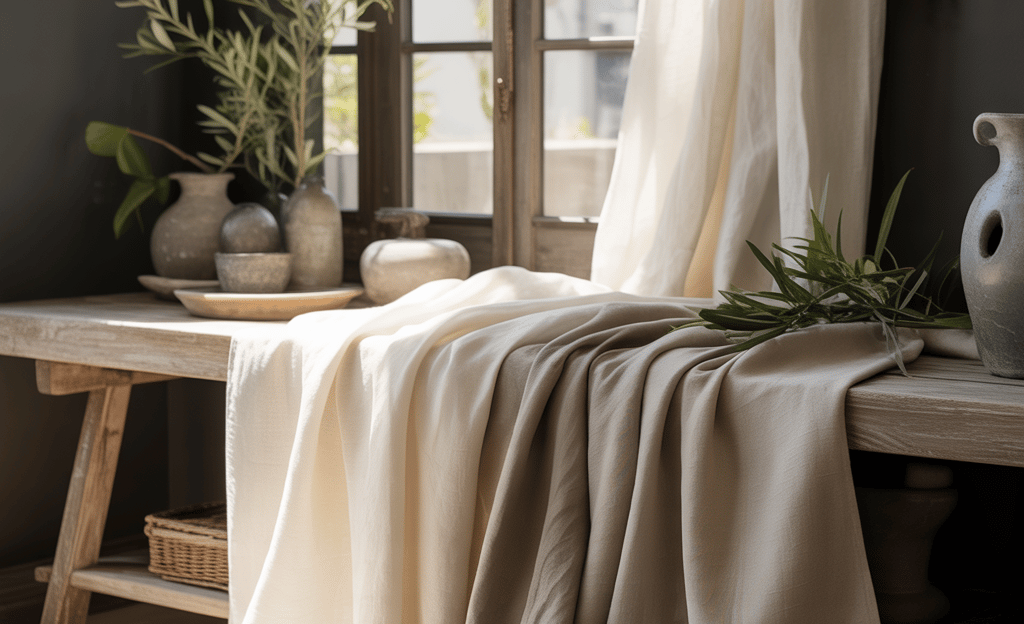
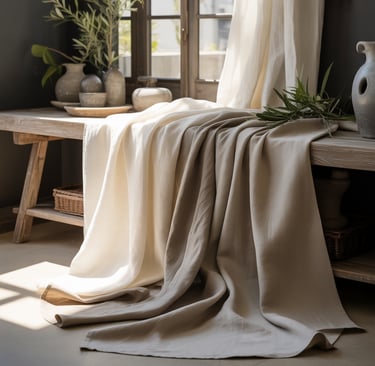
Materials matter here because they stay visible.
In a French Mediterranean living room, light doesn’t hide surfaces. It sits on them for hours. What something is made of becomes obvious very quickly, and so does whether it belongs.
This is why material choices come immediately after light and proportion. They either support the room quietly, or they undermine it over time.
Materials are chosen for how they age
Mediterranean interiors are not preserved. They’re used.
The materials that work best are those that accept wear without losing their place in the room. They soften, deepen, and settle rather than trying to stay new.
What holds up visually:
solid wood
stone
linen
wool
ceramic
These materials absorb light and develop character through use. Scratches, marks, and variation add depth rather than damage.
If a material only looks good when untouched, it’s rarely right for this setting.
Stone: weight without heaviness
Stone brings calm to a living room because it carries weight without noise.
Used in flooring, tables, or architectural elements, stone grounds lighter materials and gives the room a sense of permanence. Matte finishes work best. Polished surfaces tend to reflect too much light and draw attention to themselves.
Stone doesn’t decorate the room. It anchors it.
Wood: warmth with restraint
Wood introduces warmth, but only when it’s treated honestly.
Solid wood with visible grain works because it reacts naturally to light. Lighter woods feel sun-washed. Darker woods add depth when used sparingly.
Highly processed finishes and artificial uniformity tend to feel flat over time. They resist wear rather than absorbing it, which makes them stand out in the wrong way.
Wood should feel settled, not styled.
Linen and wool: texture over pattern
Textiles in a Mediterranean living room are tactile before they are visual.
Linen and wool soften seating and surfaces without competing with light. Their texture creates interest up close while remaining quiet from a distance.
Patterns are used sparingly, if at all. Heavy contrast in textiles tends to dominate the room instead of supporting it.
If a textile draws attention from across the room, it’s usually doing too much.
Ceramic: imperfect and intentional
Ceramic works because it accepts variation.
Hand-thrown or imperfect pieces sit comfortably in Mediterranean interiors because they reflect light unevenly. Small irregularities add life without adding noise.
Uniform, glossy ceramics often feel decorative rather than structural. They tend to read as objects instead of elements of the room.
Ceramic should feel placed, not displayed.
Finishes that hold their ground
Finishes matter as much as materials.
What works:
matte or softly honed surfaces
natural oils and waxes
finishes that allow variation
What rarely lasts:
high-gloss coatings
synthetic sheens
finishes chosen for immediate impact
In steady light, shine becomes tiring. Soft finishes age more gracefully.
What this rules out
Some materials consistently fail in Mediterranean living rooms:
synthetic substitutes meant to mimic natural materials
lightweight composites
finishes designed to stay perfect
They often look acceptable at first, then slowly start to feel out of place.
Durability here is not about strength. It’s about belonging.
How materials connect to the rest of the room
Material choices only make sense when tied back to the room’s structure.
Light determines how surfaces behave. Proportion determines how much weight a material needs to carry. Seating determines where softness belongs.
If those elements are clear, material decisions become simpler.
→ Understand how Light and Proportion influence materials and finishes
→ See how materials influence Seating
→ Understand how material affects Color
A note on selection
Not every natural material belongs in every room.
What matters is how it responds to light, how it wears, and whether it supports the room without asking for attention.
If a finish needs protecting, justifying, or explaining, it’s usually the wrong choice.